What Can You Do After a B.Des? Career Options, Jobs and Scope
- By WUD Editorial Team
- November 12, 2026
What can you do after a B.Des? You can enter a specialised design career, work with technology and consumer brands, freelance for clients, build your own design practice or pursue higher studies. A Bachelor of Design develops more than visual creativity. It trains students to research problems, understand users, generate ideas, test solutions and communicate design decisions.
This makes B.Des graduates relevant across physical products, digital experiences, fashion, interiors, mobility, communication, jewellery, animation and other design-led fields. Your career after B.Des depends on your specialisation, portfolio, practical experience, technical skills and ability to apply design thinking to real-world requirements.
What Can You Do After a B.Des?
A B.Des does not lead to one fixed profession. Your specialisation influences the type of design problems you work on, while your portfolio, internships and additional skills can shape the roles and industries you pursue.
- Start a design career: Apply for entry-level roles such as Product Designer, UX Designer, Graphic Designer, Fashion Designer or Interior Designer.
- Specialise further: Build expertise in product, communication, digital, fashion, interior, transportation, jewellery, animation or another design discipline.
- Join organisations: Work with technology companies, consumer brands, automotive businesses, e-commerce companies, agencies, media organisations or startups.
- Freelance: Take independent projects in branding, digital design, illustration, product development, fashion, interiors or 3D visualisation.
- Start a design business: Build a design studio, creative practice, product brand or other design-led venture.
- Pursue higher education: Choose an M.Des, specialised master’s programme, research or management education.
- Explore research or consulting: Apply design research, analytical and communication skills to user research, innovation and design strategy.
Career Options After B.Des
Career options after B.Des span products, digital platforms, physical environments, fashion, brands, mobility and entertainment. Your specialisation determines the kind of work you create, the tools you use and the industries you can target.
| Design Field |
Career Options |
| Product Design | Product Designer, Industrial Designer |
| Communication Design | Graphic Designer, Brand Designer |
| UX/Digital Design | UX Designer, UI Designer |
| Fashion Design | Fashion Designer, Fashion Stylist |
| Interior Design | Interior Designer, Spatial Designer |
| Transportation Design | Transportation Designer, Mobility Designer |
| Jewellery Design | Jewellery Designer, Accessory Designer |
| Animation & Game Design | Animator, Game Designer, 3D Artist |
Product and Industrial Design
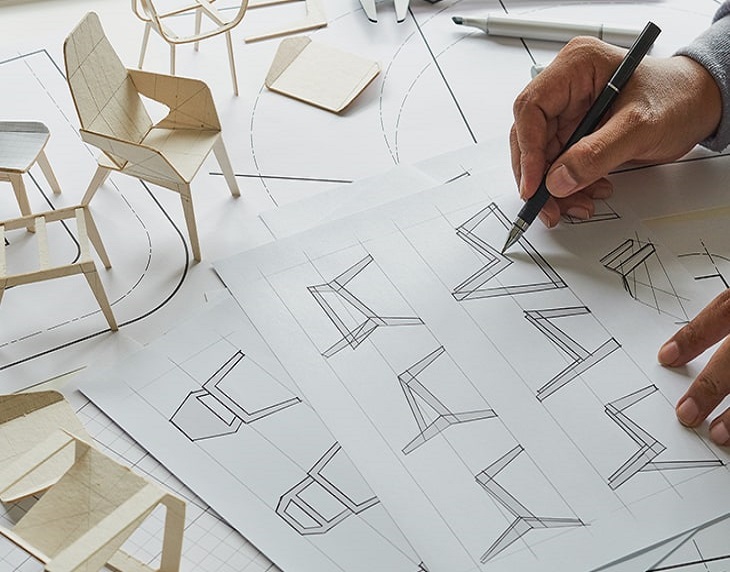
Product and industrial design focuses on developing physical products by combining user needs, functionality, materials, aesthetics and manufacturing considerations. Projects can include consumer electronics, appliances, furniture, tools and everyday objects.
Common roles include Product Designer, who develops products around user and business requirements; Industrial Designer, who works on form, function, materials and manufacturability; and Furniture Designer, who develops furniture with attention to ergonomics, construction and visual character. Design Researchers may also study users, behaviours and market requirements to identify product opportunities.
Communication and Graphic Design
Communication and graphic design uses typography, imagery, illustration, composition and visual systems to communicate ideas and brand messages across digital and physical media. Career opportunities extend across branding, advertising, publishing, editorial design, marketing and corporate communication.
Graduates can work as Graphic Designers, Brand Designers or Visual Communication Designers. With relevant professional experience, they can also progress into roles such as Art Director, responsible for the visual direction of campaigns, publications and brand communication.
UX and Digital Product Design
UX and digital product design focuses on how people interact with websites, applications, software and digital services. The work involves understanding users, identifying usability problems, structuring information, designing interactions and testing solutions.
Career options include UX Designer, UI Designer, Product Designer and UX Researcher. These professionals often collaborate with developers, researchers, product managers and business teams to develop digital products and experiences.
Fashion and Lifestyle Design
Fashion and lifestyle design covers apparel, textiles, accessories and products connected to personal style and consumer behaviour. Graduates can work with fashion houses, apparel manufacturers, lifestyle brands, retailers and independent labels.
Roles include Fashion Designer, who develops apparel concepts and collections; Fashion Stylist, who creates and coordinates looks; Textile Designer, who develops prints, patterns and surface treatments; and Accessory Designer, who works on products such as bags and footwear.
Interior and Spatial Design
Interior and spatial design focuses on creating environments that respond to functional requirements, users and experiences. Projects can include residential, commercial, hospitality, retail, exhibition and public spaces.
Graduates can work as Interior Designers, Spatial Designers, Exhibition Designers or Retail Designers, with responsibilities ranging from spatial planning and materials to circulation, furniture, lighting, visitor experience and brand expression.
Transportation and Mobility Design
Transportation and mobility design covers vehicle development as well as broader mobility experiences. Depending on their specialisation, designers may work on vehicle exteriors, interiors, colour and materials, concept development or visualisation.
Career options include Transportation Designer, Mobility Designer, Automotive Design Specialist and Transportation Visualiser.
Jewellery and Accessory Design
Jewellery and accessory design combines creative development with materials, craftsmanship, production and consumer preferences. Designers may work with jewellery houses, accessory brands, manufacturers, studios or independently.
Career paths include Jewellery Designer, Accessory Designer, CAD Jewellery Designer and Independent Jewellery Designer. Computer-aided design can be particularly useful for creating detailed three-dimensional and production-ready jewellery models.
Animation, Game and Digital Media Design
Animation, game and digital media design combines visual storytelling, motion, modelling and interactive experiences. Graduates can work in animation studios, gaming companies, advertising agencies, media organisations and digital production environments.
Roles include Animator, Game Designer, 3D Artist and Motion Designer, covering areas such as character development, gameplay, environments, motion graphics and three-dimensional assets.
Job Roles After B.Des
Jobs after B.Des vary according to specialisation, portfolio, technical capabilities and professional experience. Graduates generally begin with entry-level or junior responsibilities before moving into more specialised, strategic or creative roles.
|
Job Role |
Primary Work Area |
| Product Designer | Products and user needs |
| UX Designer | Digital user experience |
| Graphic Designer | Visual communication |
| Fashion Designer | Apparel and fashion |
| Interior Designer | Interior spaces |
| Transportation Designer | Vehicles and mobility |
| Brand Designer | Brand identity |
| Design Researcher | User and design research |
| Art Director | Creative direction |
| Design Consultant | Design strategy and solutions |
Product and UX roles focus on user and product problems, while graphic and brand roles centre on visual communication. Fashion, interior and transportation roles operate within specialised physical and creative environments. Research, consulting and art direction generally involve broader strategic or creative responsibilities and may require relevant professional experience.
Industries That Hire B.Des Graduates
B.Des jobs in India are available across industries that develop products, digital services, brands, spaces and experiences. Graduates are not limited to traditional design studios.
- Technology and e-commerce: UX, UI, product, brand and visual design for websites, applications and digital services.
- Automotive and mobility: Transportation, vehicle, interior, colour and materials design.
- Fashion and lifestyle: Apparel, textile, accessory and collection development.
- Retail and consumer products: Store environments, packaging, product presentation, furniture and everyday products.
- Advertising and media: Graphic design, communication, art direction, animation, motion graphics and visualisation.
- Architecture and interiors: Interior, spatial, exhibition and retail environments.
- Gaming: Game design, animation, 3D art and digital assets.
- Startups: Product development, UX, branding, research and communication across multidisciplinary teams.
Freelancing and Entrepreneurship After B.Des
A B.Des can also lead to an independent career. Designers can work directly with clients, develop specialised practices or create their own products and brands. Independent work combines creative responsibilities with client acquisition, pricing, contracts, project management, communication and financial planning.
Freelancing as a Designer
Freelancers can take projects across branding, digital design, product design, illustration, packaging, fashion, interiors and 3D visualisation. A sustainable freelance career requires reliable delivery, clear communication, appropriate pricing, time management and a portfolio that demonstrates the value of the work.
Starting a Design Studio
A design studio can provide specialised or multidisciplinary services in areas such as branding, product design, interiors, digital experiences, fashion or communication. Building one typically requires professional experience, a clear service offering, a strong portfolio and the ability to manage clients, budgets and collaborators.
Building a Design-Led Business
Design graduates can develop and sell their own products or services, including furniture, jewellery, fashion, accessories and digital products. This path requires design skills alongside customer research, production, pricing, marketing, distribution and business management.
Higher Studies After B.Des
B.Des higher studies can deepen design expertise, support specialisation, prepare students for research or combine design knowledge with management.
- M.Des: Advanced study in product, interaction, communication, fashion and other design disciplines.
- Specialised master’s programmes: Options can include interaction design, service design, strategic design, design management, animation and visual communication.
- Design research and academia: Research-oriented study for students interested in design methods, user behaviour, materials, technology, sustainability or social design.
- Management and related education: Programmes in management, innovation, entrepreneurship or design management for students interested in combining creative and business expertise.
An M.Des can involve complex design problems, structured research, prototyping and advanced practice. Research and academic careers generally require postgraduate qualifications and further research experience, depending on the role.
B.Des Career Scope in India
The B.Des career scope in India extends beyond creative agencies into technology, e-commerce, automotive, consumer products, retail, media, gaming and other industries. Organisations use design to develop products, improve digital experiences, communicate brand identity and create physical environments.
Key areas shaping B.Des career opportunities include:
- Digital transformation: More industries require design for digital platforms and services.
- UX and digital products: Websites, applications and software need professionals who understand user experience and interaction.
- E-commerce and consumer brands: Businesses require design for digital experiences, branding, packaging and product presentation.
- User-centred design: Research, usability testing and feedback inform product and service development.
- Emerging technologies: AI-enabled products, immersive experiences, spatial computing and 3D technologies create new design applications.
- Independent careers: Freelancing and remote collaboration allow designers to work with clients beyond their immediate location.
B.Des Salary in India
B.Des salary varies by specialisation, role, location, employer, portfolio, technical skills and professional experience. A graduate entering UX may have a different compensation structure from someone starting in fashion, interiors, product design or animation.
Earning potential can also change as designers move from junior execution-focused positions into specialised, strategic or leadership roles. Salary information is therefore more useful when evaluated by specific role, experience level and location rather than as one figure for all B.Des graduates.
Skills That Improve Career Opportunities After B.Des
A B.Des provides the foundation, but career opportunities depend on how effectively graduates apply design knowledge to real problems. A strong portfolio should demonstrate the reasoning and process behind the final outcome, not only polished visuals.
- Design thinking: Identify problems, understand users, explore alternatives and evaluate solutions.
- Creative problem-solving: Translate requirements and constraints into practical design responses.
- Visualisation: Communicate ideas through sketches, drawings, layouts, renders, models or other appropriate methods.
- Research: Use interviews, observation, user studies and competitor analysis to support decisions.
- Communication: Explain concepts, findings and design rationale clearly.
- Digital tools: Develop proficiency in software relevant to the chosen specialisation.
- Prototyping: Create physical or digital representations for testing and refinement.
- Presentation: Clearly document the problem, research, iterations and final solution.
- Collaboration: Work effectively with developers, engineers, marketers, researchers, manufacturers, architects and other professionals.
- Technical expertise: Build field-specific knowledge such as materials and manufacturing or interaction patterns and design systems.
Why Study B.Des at World University of Design?
World University of Design (WUD) focuses on design and creative education across multiple disciplines. Its B.Des approach combines design principles with project work, experimentation, interdisciplinary learning and portfolio development.
Specialised Design Education
WUD offers design education across areas including product design, transportation design, fashion design, communication design, interior and architecture-related disciplines, animation and other creative fields. Students can develop discipline-specific methods, materials, processes and professional applications alongside broader design-thinking capabilities.
Studio-Based and Experiential Learning
Studio-based learning places practice at the centre of the educational experience. Students can work through research, ideation, experimentation, prototyping, refinement and presentation, developing an understanding of how design solutions evolve in response to briefs, users and context.
Interdisciplinary Learning
Design problems often involve technology, business, culture, materials and communication rather than one discipline alone. Interdisciplinary learning exposes students to different approaches and encourages them to consider design problems from multiple perspectives.
Industry Exposure and Live Projects
Practical briefs and industry interactions can introduce students to professional constraints, feedback, timelines and expectations.
- Industry projects: Apply design methods to practical requirements.
- Workshops: Gain hands-on exposure to tools, materials and techniques.
- Industry interactions: Understand professional workflows and current practices.
- Project-based learning: Build projects that demonstrate both design thinking and execution.
Portfolio and Career Development
A design portfolio is central to applications for jobs, internships, freelance projects and higher education. It should show how a problem was researched, concepts were explored, feedback was addressed and the final solution was developed.
How to Build a Successful Career After B.Des
-
Build a Strong Portfolio
Select projects that demonstrate research, problem definition, ideation, development, testing and execution. Show the process behind the final outcome.
-
Choose a Specialisation
Identify the design field that matches your interests and strengths, then develop focused projects and technical skills for that field.
-
Gain Practical Experience
Use internships and live projects to understand professional workflows, deadlines, client requirements, team structures and industry expectations.
-
Develop Relevant Tools and Connections
Learn the software and technologies used in your field while building connections with designers, alumni, recruiters and industry professionals through internships, workshops and professional communities.
-
Keep Learning
Continue strengthening research, visualisation, problem-solving and communication while adapting to changes in technology, materials, consumer behaviour and industry requirements.
-
Consider Higher Education or Entrepreneurship
Once you understand your strengths and career direction, evaluate whether an M.Des, specialised master’s programme, freelance practice, design studio or design-led business aligns with your long-term goals.
Conclusion
A B.Des can lead to careers across product and industrial design, communication, UX and digital product design, fashion, interiors, transportation, jewellery, animation and other specialised fields. Graduates can work in technology companies, automotive organisations, fashion brands, consumer businesses, agencies, media companies, startups and design studios. They can also pursue freelancing, entrepreneurship, research or higher education.
The degree is the starting point; your specialisation, portfolio, internships, live projects, technical skills, research ability and professional experience shape how you use it. Understanding the type of design work you want to pursue and developing the skills required for that field can help you make informed career decisions after B.Des.
Frequently Asked Questions
B.Arch focuses on architecture, buildings and the built environment, combining creative design with technical knowledge. B.Des focuses on design and creative problem-solving across areas such as products, fashion, UX, communication and transportation.
Neither course is universally better. B.Arch may suit students interested in buildings, structures and spaces, while B.Des offers pathways into specialised areas such as product, fashion, communication, digital and transportation design.
Yes, Science students can pursue B.Des. Many design institutions accept students from different academic streams, although eligibility requirements vary. Always check the specific admission criteria of the university and programme you plan to apply for.
Yes, Mathematics is currently required for B.Arch eligibility under the Council of Architecture’s admission criteria. Students should also check the latest requirements of their preferred institution before applying.
B.Arch graduates can explore architecture, urban design, planning, conservation and architectural visualisation. B.Des graduates can pursue product, fashion, communication, UX, transportation, interior and other specialised design careers.
Consider the kind of work you enjoy. B.Arch suits students drawn towards buildings, spaces and construction, while B.Des offers wider specialisations across products, fashion, digital experiences, communication, mobility and other design fields.
Explore Our Programmes
B.Des in Communication Design
Explore visual storytelling for brands, media
and digital platforms.
Bachelor of Architecture (B.Arch)
Council of Architecture approved 5-year
studio curriculum.