
Choosing the best architecture college in India is about more than looking at rankings or selecting a familiar name. A good architecture school should help you develop design thinking, technical knowledge, creative problem-solving and an understanding of how buildings and spaces respond to people, culture, technology and the environment.
With several B.Arch colleges in India, students often compare institutions based on rankings, fees, admission requirements, faculty, studio culture, infrastructure, internships and career opportunities. The right choice ultimately depends on the kind of architectural education and professional pathway you want to pursue.
This guide covers some of the top architecture colleges in India to consider in 2026, along with their key strengths, B.Arch admission considerations, fees, career opportunities and the factors you should evaluate before making your decision.
Architecture involves more than drawing and theory. Students need to understand materials, construction, spaces and real-world conditions.
WUD’s learning approach includes experiences such as study tours, site visits, workshops, model making and practical design exercises, helping students connect academic concepts with physical spaces and architectural challenges.
IIT Roorkee is an important institution for students researching the best B.Arch colleges in India. Its architecture and planning education is supported by the wider IIT ecosystem, providing exposure to engineering, technology, science and research.
Students considering IIT Roorkee should evaluate its current B.Arch admission requirements, curriculum, fees and eligibility through the official institute and admission portals.
Key strength: Integration of architecture, planning, technology and a broader research-oriented academic environment.
The School of Planning and Architecture (SPA), Delhi is a specialised institution focused on architecture, planning and the built environment.
Its academic environment allows students to study architecture alongside broader questions related to cities, settlements, planning and spatial development.
The programme includes design studios and technical and theoretical subjects, making studio-based learning an important part of the educational experience.
Key strength: Strong focus on architecture, planning, urban development and the built environment.
IIT Kharagpur offers architectural education through its architecture and regional planning ecosystem.
Its integration within a major technology and research institution gives students opportunities to understand architecture alongside engineering, technology, planning and other academic disciplines.
Key strength: Architecture combined with technology, research and regional planning perspectives.
NIT Calicut is another prominent option for students comparing B.Arch colleges in India.
Its architecture programme combines design education with technical knowledge and the broader academic environment of an NIT.
Students can explore areas related to architectural design, building technology, environmental studies and professional practice.
Key strength: Architecture education within a technical and engineering-focused academic ecosystem.
CEPT University is widely recognised for its focus on the built environment and design-related education.
Its architecture education provides students with opportunities to explore design, construction, urban environments and the relationship between people and spaces.
Key strength: Design-focused architectural education with strong connections to the built environment and related disciplines.
NIT Tiruchirappalli is another institution students can consider when comparing architecture programmes in India.
Its wider technical and engineering environment can provide exposure to areas that complement architectural education.
Key strength: Architecture education within a multidisciplinary technical institution.
NIT Rourkela offers an architecture programme within a broader technology and engineering ecosystem.
Students can explore architectural design along with technical, environmental and construction-related aspects of the built environment.
Key strength: Combination of architecture, technology and technical education.
Jamia Millia Islamia is a central university with a multidisciplinary academic environment. Its architecture education connects architectural design with broader questions surrounding human settlements and the built environment.
Its New Delhi location also provides students with exposure to a diverse urban, cultural and architectural context.
Key strength: Architecture education combined with a multidisciplinary university environment and a focus on human settlements.
Sir J.J. College of Architecture is one of India’s long-established institutions for architectural education.
Its location in Mumbai provides students with exposure to a complex urban environment involving heritage, infrastructure, housing, commercial development and evolving city needs.
Key strength: Established architectural legacy and exposure to Mumbai’s diverse urban environment.
| College | Location | Programme | Key Strength |
|---|---|---|---|
|
WUD |
Sonipat, Haryana |
B.Arch |
Context-based, interdisciplinary and technology-oriented architectural education |
|
IIT Roorkee |
Roorkee, Uttarakhand |
B.Arch |
Architecture, planning, technology and research |
|
SPA Delhi |
New Delhi |
B.Arch |
Architecture, planning and urban development |
|
IIT Kharagpur |
Kharagpur, West Bengal |
B.Arch |
Architecture, technology and regional planning |
|
NIT Calicut |
Kozhikode, Kerala |
B.Arch |
Architecture within a technical academic environment |
|
CEPT University |
Ahmedabad, Gujarat |
B.Arch |
Design and built-environment education |
|
NIT Rourkela |
Rourkela, Odisha |
B.Arch |
Technical and architectural education |
|
JMI |
New Delhi |
B.Arch |
Architecture, human settlements and multidisciplinary learning |
|
Sir J.J. College of Architecture |
Mumbai, Maharashtra |
B.Arch |
Architectural legacy and urban exposure |
The programme progressively develops students’ understanding of design, construction, materials, technology, sustainability and the relationship between buildings and their surroundings.
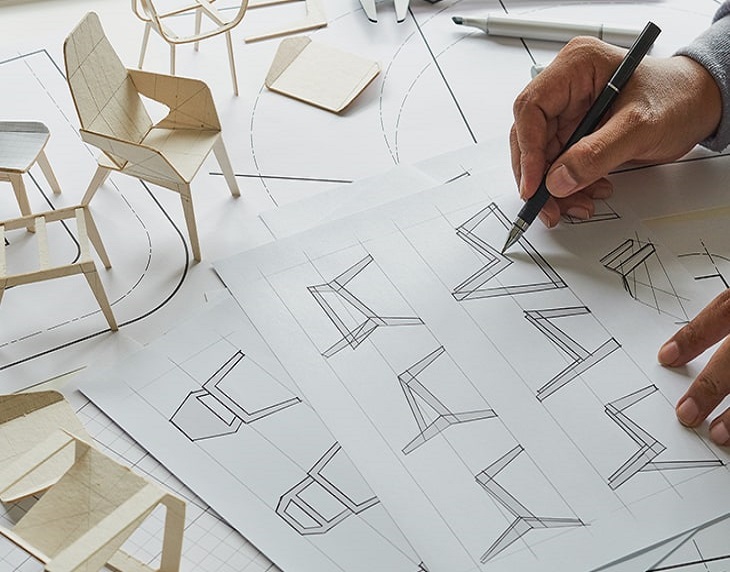
Students may also work on design projects, site studies, workshops, model making, documentation and other practical exercises as part of their architectural education. The exact subjects and structure can vary between institutions, so students should review the curriculum of each B.Arch college before applying.
B.Arch admission in India generally involves meeting the prescribed academic eligibility requirements and qualifying through the entrance examination or admission route accepted by the institution.
For students planning to apply in 2026, the main admission routes to be aware of include NATA and JEE Main Paper 2, depending on the college and the applicable admission process.
The admission process generally involves the following steps:
1. Check B.Arch eligibility
Make sure you meet the required Class 12 or diploma qualifications, subject requirements and minimum marks prescribed for B.Arch admission.
2. Check the accepted entrance examination
Find out whether the college accepts NATA, JEE Main Paper 2 or another applicable admission route. Not every institution follows the same admission process.
3. Appear for the required examination
Register for and appear for the entrance examination accepted by the institution. Check the official examination website for the latest registration dates, eligibility requirements and examination schedule.
4. Apply to the college or university
After checking the admission requirements, complete the application process for the institutions you wish to consider. Some institutions may have additional application or selection requirements.
5. Participate in counselling or the selection process
Depending on the institution and admission route, students may need to participate in centralised counselling, state-level counselling or a university-level admission process.
6. Complete admission formalities
Once selected, students need to submit the required documents and complete the fee payment and other admission formalities within the specified deadline.
Admission rules and examination requirements can change from year to year. Students should therefore verify the latest information directly with the Council of Architecture, relevant examination authorities and the individual college or university before applying.
Before applying to a B.Arch programme in India, students should check the eligibility requirements prescribed by the Council of Architecture (CoA) as well as the specific admission requirements of the college or university.
For admission to the first year of the 5-year B.Arch programme, the 2026 Council of Architecture eligibility criteria generally require candidates to meet one of the following routes:
Students must have passed or be appearing for a 10+2 or equivalent examination with:
Physics and Mathematics as compulsory subjects
One of the following subjects: Chemistry, Biology, Technical Vocational subject, Computer Science, Information Technology, Informatics Practices, Engineering Graphics or Business Studies
At least 45% aggregate marks
Candidates who have completed a 10+3 Diploma with Mathematics as a compulsory subject and secured at least 45% aggregate marks can also meet the prescribed eligibility criteria.
Students may need to qualify through a recognised architecture aptitude test, depending on the institution and admission route. NATA (National Aptitude Test in Architecture) is conducted by the Council of Architecture, while some institutions and admission routes use JEE Main Paper 2.
The Council of Architecture states that NATA is a national-level aptitude test for admission to the first year of the 5-year B.Arch degree course, subject to fulfilment of the prescribed eligibility requirements.
Meeting the basic eligibility criteria does not automatically guarantee admission.
Entrance examination requirements can vary between institutions and admission authorities.
Students should check the latest admission notification of the college or university before applying.
Candidates should also verify whether the institution is approved by the Council of Architecture for the relevant academic session.
Students should keep their academic documents, entrance examination scorecards and other required documents ready during the admission process.
For B.Arch admission in 2026, students should verify the latest eligibility, entrance examination, counselling and documentation requirements with the respective institution and admission authority before submitting an application.
The B.Arch fees in India vary significantly depending on the type of institution, location, facilities and programme structure. Government and public institutions generally have lower tuition fees, while private universities can have higher fees due to differences in infrastructure, facilities and learning opportunities.
As an indicative range, students can expect the following:
| Type of B.Arch College | Approx. Annual Tuition Fees | Approx. Total Tuition Fees for 5 Years |
|---|---|---|
|
Government/Public Colleges |
₹50,000-₹2 lakh |
₹2.5-₹10 lakh |
|
IITs/NITs & Similar Institutions |
₹1.5-₹2.5 lakh |
₹7.5-₹12.5 lakh |
|
Private Universities/Colleges |
₹2-₹4 lakh |
₹10-₹20 lakh+ |
Therefore, when comparing B.Arch fees in India, consider the total cost of studying for five years, rather than comparing tuition fees alone.
Students should also check whether the quoted fee includes examination charges, development fees, studio or professional charges, hostel fees and other institutional expenses. Since fee structures can change each academic year, always verify the latest fee details on the official college or university website before applying.
A strong architecture curriculum should balance design with technical and theoretical learning. Look for subjects and learning opportunities related to:
Also check whether the curriculum evolves with developments in digital technology, sustainability and contemporary architectural practice.
Studio education is central to architecture. Check whether students get regular opportunities to:
A strong studio culture can significantly influence your development as a designer.
Faculty members can have a major impact on your architectural education.
Research:
A good architecture school should provide opportunities for students to receive constructive feedback and develop their own design approach.
Architecture requires both digital and physical resources. When visiting or researching a college, look for:
The quality and availability of these facilities can influence the type of work students are able to undertake.
Architecture is a professional discipline, so exposure beyond the classroom can be valuable. Look for opportunities such as:
These experiences can help students understand how architectural ideas are translated into real projects.
Architecture is evolving alongside new technologies and environmental challenges. When comparing colleges, consider whether students have opportunities to explore:
This can help students develop skills relevant to contemporary architectural practice.
Location can influence your architectural education. A college located in or near a major urban environment may provide exposure to:
However, the right location ultimately depends on the kind of environment in which you want to study.
Compare more than tuition. Consider the total cost of:
This will give you a more realistic picture of the investment required for a five-year B.Arch programme.
Students looking for a B.Arch college in India may consider WUD if they want an educational approach that combines architectural fundamentals with contextual understanding, creativity, technology and interdisciplinary learning.
At WUD, students are encouraged to understand the relationship between architecture and its context, including place, culture, environment and community.
This approach helps students consider not only what a building looks like but also how it responds to the people and environment around it.
WUD’s architecture education combines studio-based learning with practical experiences such as site visits, study tours, workshops and model making.
Students can use these experiences to understand materials, construction, spatial relationships and real-world design challenges.
Sustainable architecture requires an understanding of climate, resources, local conditions and human needs.
WUD incorporates sustainability and environmental context into architectural learning, encouraging students to consider responsible approaches to the built environment.
Architecture does not exist independently of other creative disciplines.
As part of a university focused on creative education, WUD architecture students can interact with disciplines including design, fashion, art and technology.
This can help students develop broader perspectives on creativity, materials, aesthetics and human experience.
Digital tools are becoming an increasingly important part of architectural practice.
WUD’s approach incorporates contemporary digital design and emerging technologies, helping students understand how technology can support design exploration and architectural problem-solving.
WUD complements academic learning with opportunities such as internships, industry interaction, workshops and study tours.
This can help students develop a better understanding of professional practice and explore different career directions within architecture and related creative fields.
A B.Arch degree can lead to diverse career opportunities across architecture and the wider built environment. Depending on their interests, skills, portfolio and professional experience, graduates can explore roles in architectural design, urban planning, visualisation, sustainability, technology and consulting.
| Career | Job Role | Entry Level (0-2 Years) | Mid Level (3-7 Years) | Senior Level (8+ Years) |
|---|---|---|---|---|
|
Architecture |
Architect |
₹3-5 LPA |
₹6-12 LPA |
₹12-25+ LPA |
|
Architecture |
Architectural Designer |
₹3-5 LPA |
₹6-11 LPA |
₹12-22+ LPA |
|
Urban Development |
Urban Designer |
₹4-6 LPA |
₹7-14 LPA |
₹15-28+ LPA |
|
Landscape |
Landscape Designer |
₹3-5 LPA |
₹6-12 LPA |
₹12-22+ LPA |
|
Landscape |
Landscape Designer |
₹3-5 LPA |
₹6-12 LPA |
₹12-22+ LPA |
|
Digital Design |
Architectural Visualiser |
₹3-6 LPA |
₹7-14 LPA |
₹15-25+ LPA |
|
Technology |
BIM Professional |
₹4-7 LPA |
₹8-16 LPA |
₹16-30+ LPA |
|
Conservation |
Conservation Professional |
₹3-5 LPA |
₹6-12 LPA |
₹12-22+ LPA |
|
Sustainability |
Sustainable Design Professional |
₹4-7 LPA |
₹8-16 LPA |
₹16-30+ LPA |
|
Computational Design |
Computational Design Professional |
₹4-8 LPA |
₹9-18 LPA |
₹18-35+ LPA |
|
Research |
Architectural Researcher |
₹3-5 LPA |
₹6-12 LPA |
₹12-22+ LPA |
|
Spatial Design |
Spatial Designer |
₹3-6 LPA |
₹7-14 LPA |
₹14-25+ LPA |
|
Consulting |
Design Consultant |
₹4-7 LPA |
₹8-16 LPA |
₹16-30+ LPA |
Note: Salary figures are indicative and may vary depending on location, employer, portfolio quality, software and technical skills, qualifications, industry and professional experience. Senior-level compensation can be significantly higher in specialised roles and leadership positions.
A strong architecture college should help students develop both creative and technical capabilities. When comparing institutions, look for a combination of:
Strong design education: Students should have opportunities to develop concepts, experiment and refine their work.
Technical knowledge: Architecture requires understanding of structures, materials, construction and building systems.
Studio culture: Regular feedback and iterative design work are important to architectural development.
Practical exposure: Site visits, internships and real-world projects can help students understand professional practice.
Technology: Digital tools and contemporary technologies are increasingly relevant to architectural design.
Sustainability: Students should understand the environmental impact of buildings and design decisions.
Interdisciplinary learning: Exposure to other disciplines can introduce new ways of thinking about architecture.
Professional development: Students should have opportunities to develop portfolios, communication skills and an understanding of professional practice.
Choosing among the best architecture colleges in India is ultimately about finding a programme that matches your interests, learning style and career goals.
Rankings can help you create an initial shortlist, but they should not be the only factor in your decision. Compare the B.Arch curriculum, studio culture, faculty, infrastructure, fees, admission route, practical exposure, technology, sustainability and career opportunities before making your final choice.
For students looking for an interdisciplinary approach, WUD offers a B.Arch learning environment that combines context-based architectural education, studio learning, hands-on experiences, sustainability, technology and interaction with other creative disciplines.
The best architecture college for you is the one that gives you the right environment to develop your design thinking, technical knowledge, portfolio and professional direction.
Some of the prominent architecture colleges students can consider in 2026 include WUD, IIT Roorkee, SPA Delhi, IIT Kharagpur, NIT Calicut, CEPT University, NIT Trichy, NIT Rourkela, Jamia Millia Islamia and Sir J.J. College of Architecture. The right choice depends on factors such as curriculum, admission route, fees, studio learning, faculty and career goals.


Explore visual storytelling for brands, media
and digital platforms.
Council of Architecture approved 5-year
studio curriculum.