B.Arch vs B.Des: Which Course Should You Choose After 12th?
- By WUD Editorial Team
- November 12, 2026
Choosing a degree after Class 12 is not always about picking the course with the most familiar name. For students interested in creativity, there are several paths that can look similar at first but lead to very different learning experiences and careers.
Two such options are B.Arch and B.Des. Both involve design, drawing, visualisation and problem-solving, but they approach these skills from different directions. B.Arch focuses on architecture and the built environment, while B.Des opens up a much wider range of design disciplines, from products and fashion to digital experiences and mobility.
Understanding the difference between B.Arch and B.Des can help you look beyond the course titles and think about the kind of work you actually want to do.
What Is B.Arch?
Bachelor of Architecture (B.Arch) is a professional undergraduate programme focused on the design of buildings, spaces and the broader built environment. It combines creative thinking with technical knowledge, so students learn to think about how a space looks, but also how it works, stands, responds to its surroundings and can actually be built.
A B.Arch course after 12th typically involves extensive studio work along with subjects related to construction, structures, history, environmental studies and professional practice. At WUD, the five-year B.Arch programme uses contextual studio exercises, iterative design development and hands-on learning to connect architectural ideas with real-life situations.
Key aspects of B.Arch include:
- Course overview: A professional programme centred on architecture, buildings and the built environment.
- Duration: B.Arch is generally a five-year undergraduate degree.
- Main areas of study: Architectural design, building construction, structures, history, environmental studies, urban context and professional practice.
- Design and technical components: Students work with both creative design ideas and technical aspects such as materials, construction systems and building services.
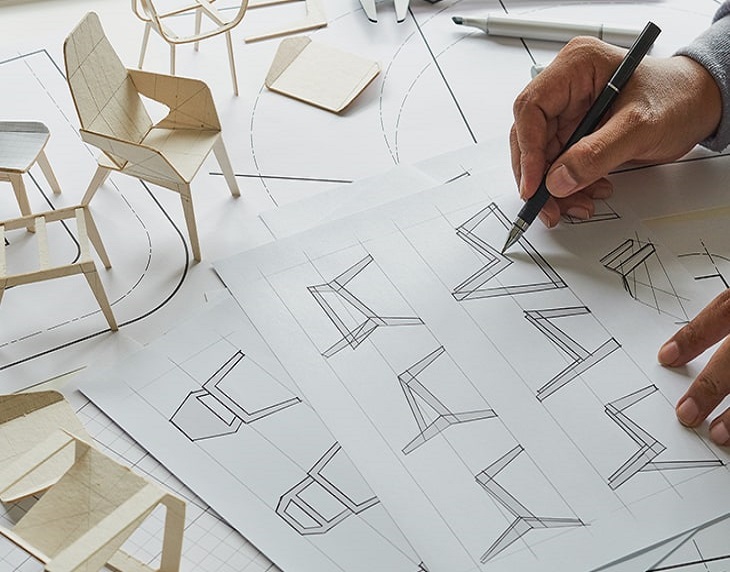
- Practical and studio learning: Architectural studios form a major part of the learning experience, supported by drawings, models, site studies, digital tools and project work.
- Career orientation: Graduates can explore architecture as well as areas such as urban design, conservation, landscape, visualisation and related built-environment fields.
What Is B.Des?
Bachelor of Design (B.Des) is an undergraduate programme that prepares students to identify problems, understand users and develop creative solutions. Unlike B.Arch, B.Des is not restricted to one type of environment. The field can lead into product design, fashion, communication, UX, transportation, interiors and other specialised areas.
The B.Des course after 12th is usually four years long. Its structure varies considerably depending on the specialisation. Students may spend their time researching users, developing concepts, making prototypes, experimenting with materials, creating visual communication or building digital experiences.
Key aspects of B.Des include:
- Course overview: An undergraduate degree focused on design thinking, creative problem-solving and making.
- Duration: B.Des programmes are typically four years.
- Major design disciplines: Product, fashion, communication, UX, transportation, interiors, animation and other specialised fields.
- Creative and practical learning: Students move between research, ideation, experimentation, making and refinement.
- Studio-based education: Design studios allow students to develop ideas through projects rather than relying only on classroom-based learning.
- Industry-oriented projects: Many programmes use real-world briefs, collaborative projects, portfolio development and industry exposure to connect academic learning with professional practice.
At WUD, the School of Design currently offers B.Des programmes across areas including Product Design, Interior Architecture & Design, Transportation Design, UX & Digital Product Design and Fashion Design, among others.
B.Arch vs B.Des: Key Differences
The simplest way to understand the B.Arch vs B.Des comparison is to look at what each course asks you to design. B.Arch is primarily concerned with buildings, spaces and the built environment. B.Des can take you into many different forms of design, depending on your chosen specialisation.
|
Factor |
B.Arch |
B.Des |
| Full Form | Bachelor of Architecture | Bachelor of Design |
| Primary Focus | Architecture and built environment | Design and creative problem-solving |
| Duration | Typically 5 years | Typically 4 years |
| Design Areas | Buildings, spaces, urban context | Product, fashion, communication, UX, transportation, etc. |
| Learning | Design + technical education | Design + creative + practical education |
| Studio Work | Architectural design studios | Design studios and projects |
| Technical Component | Structures, construction, building systems | Depends on specialisation |
| Career Areas | Architecture, planning, urban design | Product, fashion, communication, UX, interiors, etc. |
The distinction is not about one course being more creative than the other. Both require creativity. The difference lies in where that creativity is applied.
B.Arch vs B.Des: Eligibility After 12th
Eligibility is one area where students should be careful because requirements can differ between programmes and institutions.
For B.Arch, the Council of Architecture’s current 2026 criteria require candidates to have passed or be appearing for 10+2 with Physics and Mathematics as compulsory subjects, along with one specified additional subject, and at least 45% aggregate marks; a 10+3 diploma with Mathematics and the required marks is also recognised under the stated criteria. NATA is the qualifying aptitude test used for B.Arch admissions, subject to the institution’s admission requirements.
B.Des eligibility is generally more varied. For example, the 2026 NID B.Des admissions handbook accepts candidates from Science, Arts, Commerce and Humanities streams, while NIFT’s B.Des programmes require a recognised 10+2 qualification. UCEED eligibility also varies across participating institutes, with some accepting students from all streams and others requiring specific subjects.
|
Eligibility Factor |
B.Arch |
B.Des |
| Class 12 | Required | Required |
| Stream | Programme-specific requirements | Varies by institution |
| Mathematics | Relevant for B.Arch eligibility | Usually depends on programme |
| Entrance Exam | NATA/JEE Architecture and other routes | UCEED/NID DAT/NIFT/university-specific exams |
| Portfolio | Institution-specific | Institution-specific |
B.Arch Eligibility
For the current B.Arch admission framework, students need to pay particular attention to their Class 12 subjects. The Council of Architecture specifies Physics and Mathematics as compulsory subjects, along with one of the prescribed additional subjects, and a minimum aggregate requirement. Students can also enter through the recognised 10+3 diploma route with Mathematics.
At WUD, the current undergraduate programme information lists B.Arch as a five-year programme, with admission requirements including the relevant Class 12 PCM requirement and consideration of NATA/JEE Paper 2 scores, subject to Council of Architecture guidelines.
B.Des Eligibility
B.Des does not have one universal eligibility rule across every design school. Requirements depend on the institution and specialisation.
For instance, NID’s 2026 B.Des eligibility allows candidates from Science, Arts, Commerce and Humanities backgrounds, while NIFT’s B.Des programmes accept recognised 10+2 qualifications. UCEED-participating institutes have their own subject-wise eligibility requirements.
This makes it important to check the admission criteria of the specific university and programme you are applying to rather than assuming that one rule applies to every B.Des course.
B.Arch vs B.Des: What Will You Study?
The subjects you encounter can give you a much clearer picture of the difference between B.Arch and B.Des than the degree names alone.
|
B.Arch |
B.Des |
| Architectural Design | Design Fundamentals |
| Building Construction | Specialised Design Studios |
| Building Structures | Design Research |
| Architectural History | Visualisation |
| Environmental Studies | Materials and Processes |
| Urban Context | Prototyping |
| Professional Practice | Industry Projects |
B.Arch usually moves between design thinking and the technical realities of the built environment. B.Des, meanwhile, changes significantly depending on the chosen specialisation.
Subjects in B.Arch
Students may study areas such as:
- Architectural Design
- Architectural Drawing and Graphics
- Building Construction
- Theory of Structures
- History of Architecture
- Environmental Studies
- Building Services
- Surveying and Levelling
- Landscape Design
- Professional Practice
- Computer Applications in Architecture
- Architectural Training and Thesis
At WUD, the B.Arch curriculum includes architectural design, building construction, structures, environmental studies, architectural history, professional practice and a final architectural thesis, alongside electives and industry-oriented components.
Subjects in B.Des
Subjects depend heavily on the specialisation, but students may encounter:
- Design Fundamentals
- Design Research
- Visualisation
- Materials and Processes
- Prototyping
- User Research
- Design Studios
- Digital Design Tools
- Communication and Presentation
- Industry Projects
- Portfolio Development
For example, a product design student may spend considerable time studying materials, ergonomics and prototyping, while a UX student may focus more on users, interaction, research and digital product development.
B.Arch vs B.Des: Skills Required
Both degrees demand more than the ability to draw well. Students need to observe, question, research, develop ideas and communicate decisions. The balance of skills, however, changes with the discipline.
|
Skills |
B.Arch |
B.Des |
| Creativity | High | High |
| Spatial Understanding | High | Depends on specialisation |
| Drawing | Important | Important |
| Technical Knowledge | Strong emphasis | Varies by specialisation |
| Problem-Solving | High | High |
| Visualisation | High | High |
| Research | Important | Important |
A common misconception is that students need to be exceptional artists before choosing either course. Drawing and visualisation are useful, but both programmes also involve research, iteration, communication and learning how to turn an idea into something workable.
Career Options After B.Arch
A B.Arch degree can lead to conventional architectural practice as well as several adjacent fields. Your career direction can change depending on the skills you build during the course, your internships, portfolio and areas of interest.
Some possible paths include:
- Architecture
- Urban design and planning
- Landscape and spatial design
- Conservation and heritage
- Architectural visualisation
- Research and academia
- Digital design and modelling
Architecture
The most direct path after B.Arch is architectural practice. Architects work on projects ranging from residential and commercial buildings to institutional and public spaces, depending on their practice area and professional experience.
Urban Design and Planning
Students interested in cities can move towards urban design, where the focus shifts from an individual building to larger questions around streets, public spaces, neighbourhoods and urban development.
Landscape and Spatial Design
Architecture graduates can also explore landscape and spatial design, working with outdoor environments and the relationship between buildings, people and natural systems.
Conservation and Heritage
If historic buildings, cultural sites and traditional architecture interest you, conservation and heritage offer another direction. This can involve documentation, research, restoration and adaptive reuse.
Architectural Visualisation
Digital modelling, rendering and visualisation have become important parts of architectural communication. Graduates with strong digital skills can work on 3D visualisation, architectural graphics and related digital workflows.
Career Options After B.Des
The range of careers after B.Des depends largely on the specialisation you choose. A student studying transportation design will develop a very different portfolio from someone specialising in UX or fashion.
Common areas include:
- Product and industrial design
- Fashion and lifestyle design
- Communication and graphic design
- UX and digital product design
- Transportation and mobility design
- Interior and spatial design
Product and Industrial Design
Product designers work on physical products, considering how they look, function and feel to use. The process can involve research, sketching, materials, prototyping, testing and refinement.
Fashion and Lifestyle Design
Fashion and lifestyle design covers areas such as apparel, textiles, accessories and related consumer experiences. Students may explore materials, craft, technology, trends, sustainability and brand contexts.
Communication and Graphic Design
Communication designers work with visual language to communicate ideas, information and identity. Career paths can include branding, graphic design, art direction, publication design, packaging and visual communication.
UX and Digital Product Design
UX and digital product designers focus on how people interact with websites, apps, platforms and digital products. The work often combines user research, information architecture, interaction design, prototyping and usability testing.
Transportation and Mobility Design
Transportation designers work on vehicles and mobility experiences. The field can involve concept development, form, ergonomics, visualisation and an understanding of how people interact with transportation systems.
Interior and Spatial Design
Interior and spatial designers work with environments at a more detailed scale, considering how people experience and move through interiors. This can include residential, commercial, hospitality, retail and other spaces.
B.Arch vs B.Des: Which Course Matches Your Interests?
Instead of asking which degree is universally better, it is more useful to ask which kind of design problems you want to spend several years learning to solve.
|
If You Are Interested In |
Consider |
| Buildings and architecture | B.Arch |
| Structures and construction | B.Arch |
| Urban environments | B.Arch |
| Products and objects | B.Des |
| Fashion and textiles | B.Des |
| Branding and visual communication | B.Des |
| Digital experiences | B.Des |
| Vehicles and mobility | B.Des |
| Creative problem-solving across industries | B.Des |
If you already know that you want to work with buildings and the built environment, B.Arch provides the more focused route. If you are interested in design but want to explore different industries and specialisations, B.Des offers a broader starting point.
B.Arch and B.Des at WUD
At the World University of Design, architecture and design sit within a wider creative education ecosystem. The university currently offers a five-year B.Arch in Architecture alongside a range of four-year B.Des programmes across specialised design disciplines.
|
Programme |
Key Focus |
| B.Arch | Architecture, built environment and contextual design |
| B.Des | Specialised design disciplines and creative problem-solving |
B.Arch at WUD
WUD’s B.Arch programme approaches architecture through the relationship between place, community and culture. Students work through contextual studio exercises and develop projects through documentation, analysis and formulation rather than treating design as a purely visual exercise.
The programme includes exposure to:
- Architectural design studios
- Building construction and structures
- History and theory
- Sustainability and environmental studies
- Urban contexts
- Materials and digital technologies
- Heritage and landscape
- Professional practice
- Architectural training and thesis
The programme also incorporates AI-driven design tools, generative design, parametric modelling and digital fabrication alongside architectural and cultural studies.
B.Des Programmes at WUD
WUD’s B.Des offerings allow students to choose a more specific design direction. Current undergraduate programmes include Product Design, Interior Architecture & Design, Transportation Design, UX & Digital Product Design, Fashion Design and other specialised design disciplines.
This range allows students to build depth in a particular field while developing the broader skills that design education requires: research, ideation, visualisation, making, critique and communication.
Interdisciplinary Learning at WUD
One of the useful differences between studying design in isolation and studying within a wider creative university is the opportunity to encounter other disciplines.
At WUD, architecture, design, fashion, visual arts, performing arts, technology and business form part of the same larger academic ecosystem. This creates opportunities for students to see how different creative practices overlap and how a design problem may need perspectives from more than one field.
Studio-Based and Experiential Learning
Both architecture and design are disciplines where learning happens through doing. A concept becomes clearer when it is drawn, modelled, prototyped, tested, discussed and revised.
WUD’s architecture programme, for example, uses studio exercises, independent inquiry, experimentation and iterative development, with faculty working as mentors through the process. Its School of Design similarly describes its programmes around studio practice, hands-on making, digital tools and research-driven inquiry.
That kind of environment matters because a design education is ultimately about developing a way of thinking not simply collecting a list of subjects.
Factors to Consider Before Choosing Between B.Arch and B.Des
Before making the decision, look at the course from the perspective of the work you want to do rather than only the degree name.
- Your creative interests: What naturally holds your attention buildings, products, fashion, digital experiences, mobility or something else?
- Preferred type of design work: Think about whether you enjoy working with spaces, physical objects, people, systems or digital interfaces.
- Technical vs creative orientation: B.Arch has a strong technical component involving structures, construction and building systems. B.Des varies according to specialisation.
- Course duration: B.Arch is generally five years, while B.Des is generally four years.
- Eligibility requirements: Check the subjects, marks and other criteria before applying.
- Entrance examination: Identify which entrance tests your preferred institutions accept.
- Preferred career path: Look at the actual work done in the careers you are considering.
- Industry exposure: Check whether the programme includes internships, live projects, collaborations and opportunities to build a professional portfolio.
- Curriculum: Compare subjects and project work instead of relying only on course titles.
- College infrastructure: Studios, workshops, labs, libraries and digital facilities can make a significant difference to a hands-on creative education.
Conclusion
The B.Arch vs B.Des decision becomes easier when you stop treating it as a choice between two similar creative degrees and look at what each one is designed to teach.
B.Arch offers a focused education in architecture and the built environment, combining design with structures, construction, environmental considerations and professional practice. B.Des offers a broader design pathway, with the opportunity to specialise in fields such as product, fashion, communication, UX, transportation or interiors.
There is no single answer to the question of B.Arch or B.Des after 12th. The right starting point is your own interest in the kind of problems you want to solve, the environments you want to work in and the kind of creative career you see yourself building.
For students who want to explore these possibilities in a university environment built around design and creative disciplines, WUD offers both B.Arch and a diverse range of B.Des programmes, allowing students to develop specialised skills alongside a wider understanding of creative practice.
Frequently Asked Questions
B.Arch focuses on architecture, buildings and the built environment, combining creative design with technical knowledge. B.Des focuses on design and creative problem-solving across areas such as products, fashion, UX, communication and transportation.
Neither course is universally better. B.Arch may suit students interested in buildings, structures and spaces, while B.Des offers pathways into specialised areas such as product, fashion, communication, digital and transportation design.
Yes, Science students can pursue B.Des. Many design institutions accept students from different academic streams, although eligibility requirements vary. Always check the specific admission criteria of the university and programme you plan to apply for.
Yes, Mathematics is currently required for B.Arch eligibility under the Council of Architecture’s admission criteria. Students should also check the latest requirements of their preferred institution before applying.
B.Arch graduates can explore architecture, urban design, planning, conservation and architectural visualisation. B.Des graduates can pursue product, fashion, communication, UX, transportation, interior and other specialised design careers.
Consider the kind of work you enjoy. B.Arch suits students drawn towards buildings, spaces and construction, while B.Des offers wider specialisations across products, fashion, digital experiences, communication, mobility and other design fields.
Explore Our Programmes
B.Des in Communication Design
Explore visual storytelling for brands, media
and digital platforms.
Bachelor of Architecture (B.Arch)
Council of Architecture approved 5-year
studio curriculum.