How to Build a Design Portfolio for College Admission: A Step-by-Step Guide
- By WUD Editorial Team
- November 12, 2026
A design portfolio for college admission is more than a folder of polished drawings or finished projects. It gives an admission team a closer look at how you observe, generate ideas, experiment, solve problems, and develop a creative concept from its early stages to a final outcome.
Students applying for design programmes may have very different creative backgrounds. Some may have formal art training, while others may have developed skills through school projects, sketching, photography, digital work, crafts, or personal experimentation. Knowing how to make a design portfolio can help you organise these experiences into a clear story about your interests, abilities, and potential as a design student.
What Is a Design Portfolio?
A design portfolio is a selected collection of work that communicates how a student thinks and creates. For college admission, it can include finished projects, sketches, experiments, research, photographs, prototypes, and process work that demonstrate the development of ideas.
A portfolio can be used to:
- Show your creative interests and abilities
- Demonstrate observation and visualisation
- Present how you approach design problems
- Show experimentation with different media or methods
- Explain how an idea developed from research to outcome
- Give context to your individual creative journey
A portfolio is different from simply collecting artwork. A collection may show only completed pieces, while a student design portfolio should also communicate decisions, experimentation, development, and problem-solving.
Why Is a Design Portfolio Important for College Admission?
A design portfolio for admission can give colleges information that marks and entrance-test scores alone may not show. It can demonstrate how you approach creative work and whether you are curious, observant, willing to experiment, and able to develop ideas.
A portfolio may help demonstrate:
- Creative thinking: How you interpret a theme or problem
- Design skills: Drawing, visualisation, making, digital work, or other abilities
- Individual interests: The subjects, materials, or problems that interest you
- Experimentation: Your willingness to test alternatives
- Design process: How an initial idea changes through research and iteration
- Potential: How you may respond to studio-based design education
The objective is not necessarily to look like a professional designer before entering college. For undergraduate applicants, colleges may be more interested in creative potential and thinking than professional-level execution.
What Should a Design Portfolio Include?
The exact design portfolio requirements differ between colleges. However, a balanced portfolio usually combines final work with evidence of observation, experimentation, research, and development.
| Portfolio Element |
What It Can Show |
| Sketches and Drawings | Observation and visualisation |
| Design Projects | Problem-solving and design thinking |
| Photography | Composition and visual awareness |
| Illustrations | Creativity and visual storytelling |
| Models and Prototypes | Making and experimentation |
| Digital Work | Digital design skills |
| Personal Projects | Individual interests and initiative |
| Research/Process Work | Thinking and development |
Sketches and Drawings
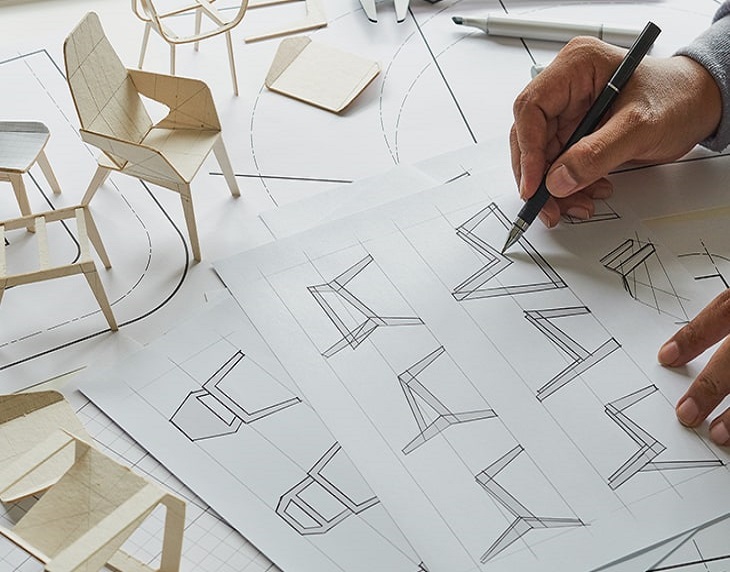
Sketches can demonstrate observation, proportion, perspective, visual thinking, and idea development. Include a mixture of observational and exploratory work rather than only highly finished drawings.
Examples could include everyday objects, people, streets, interiors, product ideas, environment studies, storyboards, or quick concept sketches.
Design Projects
A project can show how you recognised a problem, researched it, generated ideas, compared alternatives, and developed an outcome.
For example, you could redesign packaging, develop a small storage product, create a visual identity for an event, or rethink how a public space could be used.
Photography and Visual Work
Photography can show your awareness of composition, colour, people, spaces, patterns, light, and visual narratives. Select photographs that communicate a point of view rather than including unrelated images.
Models and Prototypes
Models demonstrate your ability to move from a two-dimensional idea to a physical form. These may include paper models, material explorations, product mock-ups, spatial models, fashion experiments, or other prototypes.
Digital Design Work
Digital work may include illustrations, posters, interface concepts, motion experiments, typography, 3D models, or digital compositions. Mention the purpose of the work rather than focusing only on the software used.
Personal and Experimental Projects
Personal projects can make a portfolio for design college more individual. These could include sketchbook experiments, crafts, photography series, illustrated stories, redesign projects, handmade objects, or creative work developed independently.
How to Build a Design Portfolio Step by Step
Building a portfolio becomes easier when you treat it as a design project itself. Begin with your interests, select meaningful work, and then organise it so the reader can understand both your outcomes and your process.
Step 1: Identify Your Design Interests
Start by asking what kind of design attracts you.
You may be interested in fashion, products, communication, interiors, transportation, UX, animation, illustration, or several areas. Your portfolio does not have to lock you into one specialisation, but your choices should give some sense of what you enjoy observing and creating.
Step 2: Select Your Best Work
Quality matters more than adding every project you have completed.
Select work that:
- Shows different abilities
- Has a clear idea or purpose
- Demonstrates experimentation
- Includes some process development
- Reflects your personal interests
- Can be explained confidently during an interview
Avoid adding weaker work only to increase the number of pages.
Step 3: Show Your Design Process
Do not show only the final result.
Include early sketches, alternative ideas, failed attempts, material tests, user observations, photographs, notes, or prototypes where they help explain how the project developed.
Admission teams can then see how you think, not only what the finished work looks like.
Step 4: Add Research and Inspiration
Some projects benefit from showing what informed your decisions. This could include observations, photographs, mood boards, material studies, user research, references, or notes.
Use inspiration to explain your thinking. Avoid filling pages with images taken from other creators without showing how they influenced your own work.
Step 5: Explain Your Design Concepts
Give each major project a short description.
Explain:
- What you were trying to create or solve
- What inspired the project
- How you developed the idea
- What materials or methods you used
- What you learned or changed during the process
Keep descriptions concise so they support the visuals rather than overpower them.
Step 6: Organise the Portfolio
A simple order could be:
- Begin with one of your strongest projects.
- Introduce yourself briefly where required.
- Group related work logically.
- Show process before or alongside outcomes.
- Vary project types to maintain visual interest.
- Finish with another memorable project.
The exact sequence can change depending on the application format.
Step 7: Review and Refine the Final Portfolio
Before submitting, check:
- Is your strongest work included?
- Can the viewer understand each project?
- Is there enough process work?
- Are images clear and properly cropped?
- Are captions readable?
- Is spelling consistent?
- Are pages visually organised?
- Is all work genuinely yours?
- Does the file meet size and format rules?
- Does it follow the college’s exact instructions?
How Many Projects Should a Design Portfolio Have?
There is no universal number of projects that every design portfolio for college must contain. Colleges may publish their own page, file-size, project, or submission limits, so these instructions should take priority over general advice.
When deciding what to include:
- Prioritise quality over quantity
- Include different types of projects where relevant
- Balance finished work with process
- Avoid repeating very similar pieces
- Leave out work that does not strengthen the portfolio
- Follow college-specific portfolio guidelines
Six well-developed projects can communicate more than a much larger collection with little explanation, but applicants should not use a fixed project count unless their target institution specifies one.
How to Present Your Design Portfolio
Good presentation makes your work easier to understand without distracting from it. Whether the portfolio is digital or physical, layout, image quality, sequence, and descriptions should support the projects.
Digital Portfolio
A digital portfolio may be submitted as a PDF, presentation, website, or another format requested by the college. Use clear images, readable text, consistent page sizes, and compressed files that remain visually sharp.
Physical Portfolio
If physical creative work is requested or permitted during an interview, organise it so individual pieces can be viewed easily. Protect original work and include photographs where carrying large models or objects is impractical.
Portfolio Layout and Visual Consistency
Use a consistent layout, spacing system, type style, and project structure. Avoid excessive decorative elements that compete with the work itself.
Project Descriptions and Captions
Captions can identify the project, medium, purpose, or stage of development. For larger projects, use a short explanation to connect research, process, and outcome.
Design Portfolio Examples by Specialisation
The content of a B.Des portfolio can vary depending on the area a student wants to study. Applicants do not necessarily need professional work within the specialisation, but relevant projects can demonstrate genuine interest.
|
Design Specialisation |
Portfolio Ideas |
| Fashion Design | Fashion illustrations, textiles, garment concepts |
| Product Design | Product concepts, sketches, prototypes |
| Communication Design | Posters, branding, typography, graphics |
| Interior Design | Space planning, sketches, material concepts |
| Transportation Design | Vehicle sketches, concepts, 3D models |
| UX/Digital Design | Wireframes, interfaces, user research |
| Fine Arts | Painting, drawing, illustration, mixed media |
Fashion Design Portfolio
A fashion-focused portfolio may include garment concepts, fashion illustrations, fabric experiments, textile development, mood boards, silhouettes, photography, or personal styling projects.
Product Design Portfolio
Product applicants can show sketches, user observations, form studies, material experiments, models, prototypes, and projects that demonstrate how a product idea evolved.
Communication Design Portfolio
Relevant work can include posters, typography, branding concepts, illustration, editorial layouts, photography, visual narratives, or experimental communication projects.
Interior Design Portfolio
Students may include observational drawings, spatial studies, models, material explorations, plans, furniture concepts, photography, or projects examining how people interact with spaces.
Transportation Design Portfolio
A portfolio can include vehicle sketches, perspective studies, form exploration, mobility concepts, models, and projects addressing future transportation or user needs.
UX and Digital Design Portfolio
UX-focused work may show problem identification, user research, information architecture, wireframes, interface concepts, prototypes, and explanations of design decisions.
Fine Arts Portfolio
Fine Arts portfolios can contain drawings, paintings, illustration, sculpture, mixed media, printmaking, photography, or experimental work showing personal visual exploration.
Common Design Portfolio Mistakes to Avoid
A strong portfolio is selective, clear, and personal. Some common issues can make it difficult for reviewers to understand the applicant’s actual abilities.
Avoid:
- Including too much work
- Showing only finished designs
- Copying another designer’s style or project
- Adding unrelated work without context
- Poor organisation
- Inconsistent presentation
- Using long text where visuals could communicate better
- Not showing the design process
- Including work you cannot explain
- Ignoring college-specific design portfolio requirements
Design Portfolio Tips for First-Time Applicants
Students do not need years of professional design experience to begin building a portfolio. Starting early gives you time to experiment, identify stronger work, and improve how projects are documented.
- Start building early: Save sketches, photographs, experiments, and project development as you work.
- Experiment with different mediums: Try drawing, photography, model making, digital work, materials, or mixed media.
- Document your creative process: Photograph prototypes and preserve rough sketches instead of discarding them.
- Keep your work authentic: Let the portfolio reflect your own interests and observations.
- Ask for feedback: Get comments on whether projects and layouts are easy to understand.
- Revise before submission: Remove repetition and improve unclear project explanations.
- Check the college’s exact requirements: File type, dimensions, project count, portfolio stage, and submission method may vary.
How WUD Evaluates Design Aspirants
World University of Design’s published admission process for creative programmes includes an application, aptitude test, and interview/portfolio interaction before an offer of admission. Its admissions information states that creative evidence such as portfolios, drawings, photographs, crafts, films, digital work, writing, projects, or models can be presented during the interaction.
For undergraduate applicants, WUD also states that a professionally prepared portfolio is not necessarily expected. This is useful for first-time applicants because the emphasis can be on showing genuine creative work and aptitude rather than trying to imitate a professional designer’s portfolio.
Key areas reflected in its current admission information include:
- Creative aptitude
- Observation and visualisation
- Problem-solving
- Communication
- Creative evidence
- Programme interest
- Interview interaction
Design Aptitude
WUD states that its aptitude assessment is intended to evaluate aptitude rather than rote academic knowledge. Depending on the programme, areas can include observation, logical reasoning, visualisation, creativity, communication, lateral thinking, and problem-solving.
Creativity and Conceptual Thinking
Applicants should be prepared to demonstrate how they interpret an idea or problem rather than only producing technically polished artwork. Experimental projects and visible idea development can help communicate this aspect of a student’s work.
Portfolio and Creative Work
WUD describes a portfolio or other creative evidence as useful during the interview/portfolio interaction. Applicants may show drawings, photographs, films, digital work, craft, writing, projects, models, or other material representing their abilities and interests.
Its published admission procedure also notes that creative evidence may be showcased during the interview stage.
Interview and Overall Profile
After the aptitude stage, shortlisted students attend an interview in which the panel may ask questions related to the chosen field of study. This means applicants should be ready not only to show their work but also to explain why they created it, what interested them, and what they learned through the process.
Conclusion
Building a design portfolio for college admission is not about producing the largest collection of polished artwork. A useful portfolio shows what you notice, how you generate ideas, how you experiment, and how your thinking develops from an early concept to an outcome.
Start with work that genuinely represents your interests, include process alongside finished projects, organise it clearly, and explain important decisions without overcrowding the pages. Most importantly, check the design portfolio for B.Des admission requirements of every college separately because portfolio format, submission stage, and expectations can differ.
Frequently Asked Questions
Include selected sketches, design projects, process work, experiments, models, photography, digital work, or personal projects that demonstrate your creativity and thinking. The exact content should also follow the requirements of the college.
There is no universal project count. Include enough work to demonstrate variety and development without adding repetitive or weaker projects, and follow any project or page limits given by the college.
Not for every B.Des admission route. Some institutions use entrance examinations or studio assessments without a portfolio, while others may request a portfolio during application or interview stages.
Yes. A portfolio can include self-initiated projects, school work, sketches, photography, crafts, digital experiments, models, or other original creative work. Formal professional experience is not required to begin demonstrating your ideas and creative process.
Yes, selected sketches and process work can be useful when they explain how an idea developed. Include them alongside final outcomes rather than filling the portfolio with unrelated rough work.
Focus on authentic projects, clear thinking, experimentation, and a visible design process. A well-organised portfolio that explains how and why you developed an idea can communicate more about you than excessive decoration or a large number of finished pieces.
Explore Our Programmes
B.Des in Communication Design
Explore visual storytelling for brands, media
and digital platforms.
Bachelor of Architecture (B.Arch)
Council of Architecture approved 5-year
studio curriculum.