B.Des Admission 2027: Eligibility, Entrance Exams, Portfolio and Career Scope
- By WUD Editorial Team
- November 11, 2026
Students planning a career in product design, fashion, communication, interiors, transportation, UX, or other creative fields can pursue a Bachelor of Design after Class 12. However, B.Des admission 2027 will not follow one common process across India. Depending on the college, students may need to clear NID DAT, UCEED, NIFT, a university-specific design aptitude test, or another selection process.
Eligibility, subject requirements, age limits, portfolios, interviews, and admission stages also vary between institutions. Students interested in a B.Des course after 12th should therefore compare the programme and admission requirements of each college rather than assuming one entrance route applies everywhere. This guide explains B.Des eligibility 2027, entrance exams, portfolio requirements, specialisations, preparation, admission steps, and career scope.
What Is a B.Des Course?
B.Des, or Bachelor of Design, is an undergraduate degree focused on design thinking, creative problem-solving, research, visualisation, materials, technology, and practical design development.
Depending on the specialisation, students may study:
- Design fundamentals and visual communication
- Drawing and representation
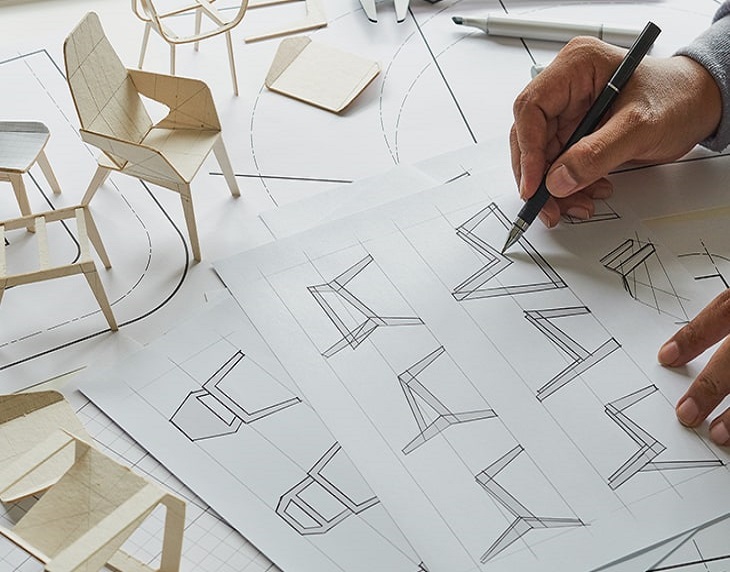
- Materials and prototyping
- Digital design tools
- User research
- Design processes
- Studio projects
- Industry projects and internships
- Portfolio development
Many B.Des programmes run for four years, although students should verify the duration and structure of each institution.
B.Des Eligibility Criteria 2027
B.Des eligibility criteria for 2027 can vary across colleges, universities, and entrance-exam routes. Most institutions require students to complete Class 12 or an equivalent recognised qualification, but minimum marks, subject requirements, and age criteria may differ. Some colleges accept students from all academic streams, while others may have programme-specific conditions. Students should therefore check the official 2027 eligibility requirements of each shortlisted institution before applying.
|
Eligibility Factor |
What Students Should Check |
| Educational qualification | Class 12 or recognised equivalent |
| Stream | May accept all streams or specify particular subjects |
| Minimum marks | Depends on institution |
| Age criteria | Applies in some entrance systems |
| Entrance requirement | NID DAT, UCEED, NIFT, university DAT, or other route |
| Portfolio/interview | Depends on the college and selection stage |
Educational Qualification
Most B.Des programmes require candidates to complete Class 12 or an equivalent recognised qualification. Students appearing for their final Class 12 examination may also be eligible to apply provisionally at many institutions, subject to submitting their final results within the required timeline.
Age Criteria
Age conditions differ by admission route. NID, NIFT, and UCEED currently use specific age or qualifying-year conditions, while some universities may follow different rules.
Students should use the official 2027 admission notification for the exact cut-off rather than applying previous-year age limits automatically.
Subject Requirements
Students from Arts, Commerce, and Science can access many B.Des programmes, but this is not universal.
For example, UCEED 2026 allowed candidates from all streams to appear for the examination, but admission subject requirements differed between participating institutes. IIT Bombay, IIT Delhi, IIT Hyderabad, and IIT Indore accepted all streams, while IIT Guwahati and IIT Roorkee required Physics, Chemistry, and Mathematics.
Eligibility for Different B.Des Specialisations
|
Specialisation |
Typical Class 12 Consideration |
| Fashion Design | Often open to multiple streams |
| Product Design | Usually open to multiple streams, subject to institute rules |
| Communication Design | Often open to multiple streams |
| Interior Design | Usually open to multiple streams |
| Transportation Design | Institution-specific eligibility |
| UX/Digital Product Design | Usually institution-specific |
| UCEED-linked programmes | Subject requirements vary by participating institute |
B.Des Entrance Exams 2027
Students planning B.Des admission in 2027 can choose from several B.Des entrance exams after 12th, including national-level and university-specific tests. The required exam depends on the institution and programme, and each test may assess areas such as design aptitude, creativity, visualisation, problem-solving, general ability, or studio skills. Some colleges may also accept scores from more than one entrance exam or conduct their own admission test. Students should therefore check the accepted exam and selection process for each shortlisted B.Des college before applying.
|
Entrance Exam |
Conducting Institution |
Relevant Admission |
| NID DAT | National Institute of Design | NID B.Des programmes |
| UCEED | IIT Bombay | B.Des at participating and result-sharing institutes |
| NIFT Entrance Exam | NIFT | NIFT B.Des programmes |
| University-Specific Tests | Individual universities | Institution-specific B.Des programmes |
| WUDAT/DAT | World University of Design | Applicable WUD design programmes |
NID DAT
NID DAT is the admission examination used for B.Des admission at participating National Institutes of Design.
The latest framework uses DAT Prelims followed by DAT Mains. The official NID 2027 handbook has not yet been released, so students should verify eligibility, dates, and the 2027 test structure when NID publishes it.
UCEED
UCEED is conducted by IIT Bombay for undergraduate design admission. UCEED 2027 is officially scheduled for January 17, 2027, with detailed information expected on October 1, 2026.
UCEED scores are used by participating institutes and also by separate result-sharing institutions.
NIFT Entrance Examination
For the latest NIFT B.Des framework, candidates take the Creative Ability Test (CAT) and General Ability Test (GAT), followed by a Situation Test for shortlisted candidates. Both CAT and GAT are mandatory for B.Des shortlisting under the current process.
Students should check the official 2027 NIFT guidelines once released.
University-Specific Design Entrance Tests
Many B.Des colleges in India conduct their own aptitude tests, interviews, portfolio interactions, or combinations of these instead of depending only on national-level examinations.
Students should compare the actual selection process rather than assuming private or university-specific admission means direct admission.
WUD Design Aptitude Test
World University of Design currently lists WUDAT 2027 for January 2, 2027, with December 26, 2026 as the registration deadline. The test is online.
WUD’s admission process includes application, aptitude testing, and an interview/portfolio interaction. It also states that valid NID, NIFT, and UCEED scores can be considered in lieu of its DAT for applicable programmes.
B.Des Admission Process 2027
The exact B.Des admission process in India varies, but students can generally expect:
- Choose a specialisation and shortlist colleges.
- Check Class 12, stream, marks, and age eligibility.
- Register for the required B.Des entrance exam 2027.
- Appear for the entrance or aptitude test.
- Complete portfolio, studio test, interview, or other stages where required.
- Check results and counselling or seat-allocation requirements.
- Complete document verification and fee payment.
- Confirm admission within the college’s deadline.
Students applying to several institutions should maintain a calendar because examination and application timelines can overlap.
B.Des Portfolio Requirements
B.Des portfolio requirements for admission vary across colleges and selection processes. Some institutions evaluate a portfolio to understand a student’s creativity, observation, design thinking, and ability to communicate ideas, while others rely primarily on entrance tests, studio assessments, or interviews. Students should therefore check whether a portfolio is mandatory, optional, or required only at a later admission stage.
Where a portfolio is required, students may need to prepare:
- Observational drawings and sketches
- Creative or personal projects
- Illustration or visual communication work
- Product, spatial, fashion, or digital design concepts
- Photography or material explorations
- Process work showing how ideas developed
- Original work that can be discussed during an interview
What Is a Design Portfolio?
A design portfolio is a selected collection of creative work showing how a student observes, thinks, develops ideas, solves problems, and communicates visually.
What Should a B.Des Portfolio Include?
Where a portfolio is requested, it may include:
- Observational drawings
- Sketchbook work
- Illustration
- Photography
- Product or spatial concepts
- Digital design work
- Material experiments
- Personal creative projects
- Process sketches showing idea development
How to Create a Strong B.Des Portfolio
- Show your strongest work rather than everything you have created.
- Include process, not only final images.
- Demonstrate different ways of thinking and making.
- Keep presentation clear and organised.
- Include original work that you can confidently discuss.
- Explain selected projects briefly where context is useful.
Is a Portfolio Mandatory for B.Des Admission?
A portfolio is not universally mandatory for B.Des admission.
For example, UCEED joint B.Des admission is based on the examination and seat-allocation process rather than a general portfolio stage. WUD, by contrast, includes an interview where creative evidence such as portfolios, drawings, photographs, or crafts may be showcased.
Always check the requirement of the individual college.
How to Prepare for B.Des Entrance Exams 2027
Good preparation should develop design aptitude rather than focus only on drawing.
Students can work on:
- Observation
- Visual reasoning
- Creative problem-solving
- Drawing and visualisation
- Spatial thinking
- General design awareness
- Communication
- Timed problem-solving
Develop Observation Skills
Observe everyday products, spaces, signs, packaging, furniture, and human interactions. Ask why something has been designed in a particular way and how it could work differently.
Practise Drawing and Visualisation
Focus on:
- Perspective
- Proportion
- Objects
- People
- Scenes
- Storyboarding
- Communicating ideas through quick sketches
Build Creative Problem-Solving Skills
Practise problems with more than one possible solution.
For example, redesign a school bag for someone travelling by bicycle, or rethink public seating for elderly users. The objective is to connect observation with user needs and design decisions.
Follow Design and Cultural Trends
Students can learn from:
- Exhibitions and museums
- Products and packaging
- Architecture
- Visual communication
- Current design publications
- Cultural and social changes
Practise Under Time Constraints
Entrance tests require students to communicate ideas within limited time. Timed practice can improve decision-making, sketching speed, and answer organisation.
How to Choose the Right B.Des Specialisation
Different B.Des specialisations lead to different learning environments and career paths.
|
Specialisation |
Suitable For |
Key Areas |
| Fashion Design | Fashion-focused students | Apparel, textiles, styling |
| Product Design | Product-oriented students | Materials, products, prototyping |
| Communication Design | Visual communicators | Branding, graphics, media |
| Interior Design | Spatial thinkers | Spaces, materials, furniture |
| Transportation Design | Mobility-focused students | Vehicles, transport, mobility |
| UX/Digital Product Design | Technology-focused students | UX, interfaces, digital products |
Fashion Design
Fashion Design focuses on apparel, materials, garment development, fashion communication, and related industry practices.
Product and Industrial Design
Students learn to develop products through research, ideation, materials, prototyping, usability, and manufacturing considerations.
Communication and Graphic Design
This area focuses on visual communication across branding, typography, publishing, digital media, and related formats.
Interior and Spatial Design
Students work with spaces, materials, furniture, lighting, human interaction, and spatial planning.
Transportation Design
Transportation Design focuses on mobility, vehicle concepts, form, user requirements, and transportation systems.
UX and Digital Product Design
UX and digital design focuses on user research, interfaces, interaction, digital services, and product experiences.
Why Choose B.Des at World University of Design
World University of Design is a UGC-recognised state private university in Sonipat, Delhi NCR, focused on creative disciplines including design, fashion, communication, architecture, arts, business, and technology.
B.Des Specialisations at WUD
WUD currently lists four-year B.Des programmes including:
- Product Design
- Transportation Design
- Interior Architecture & Design
- UX & Digital Product Design
- Fashion Design
- Fashion Communication
- Textile Design
- Graphic Communication Design
- Film & Video
- Animation & Game Design
Design Aptitude and Admission Process
For current B.Des admissions, WUD requires Class 12 with a minimum 50% and uses an aptitude test followed by an interview. NID, NIFT, and UCEED-qualified applicants can receive consideration under its alternative admission route.
Studio-Based and Experiential Learning
WUD describes its academic approach as studio-based and practice-led. Students may engage in:
- Studio projects
- Practical experimentation
- Industry visits
- Live projects
- Internships
- Exhibitions
Interdisciplinary Creative Environment
Design, fashion, communication, visual arts, architecture, business, technology, and performing arts operate within the same university environment, creating opportunities for interdisciplinary projects.
Industry Exposure and Portfolio Development
WUD’s career services information highlights:
- Live projects
- Industry interaction
- Internship support
- Competitions and exhibitions
- Portfolio development
- Graduation projects
Career Scope After B.Des
B.Des career scope depends largely on the student’s specialisation, portfolio, practical experience, and technical skills.
|
Career Area |
Example Roles |
| Product Design | Product Designer, Industrial Designer |
| Communication Design | Graphic Designer, Communication Designer |
| Fashion Design | Fashion Designer, Fashion Stylist |
| Interior Design | Interior Designer, Spatial Designer |
| UX/Digital Design | UX Designer, UI Designer |
| Transportation Design | Transportation Designer, Mobility Designer |
Design and Creative Careers
Graduates can work in design studios, brands, consultancies, manufacturing companies, media organisations, fashion businesses, and architecture or interior practices.
Digital and Technology-Driven Careers
Digital products have created opportunities in UX, UI, interaction design, digital communication, game design, animation, and other technology-linked fields.
Entrepreneurship and Freelancing
Designers can also work independently, build studios, develop products, or provide freelance services after developing suitable professional experience and networks.
Higher Education
Graduates may consider:
- M.Des
- Design-focused master’s programmes
- UX or interaction design programmes
- Specialised international design programmes
- Management or design-strategy education
B.Des Admission 2027: Important Things to Check Before Applying
Students searching for the best B.Des colleges in India should compare the programme rather than rely only on rankings.
Check:
- 2027 eligibility
- Accepted Class 12 streams
- Age requirements
- Entrance exam
- Portfolio or interview requirement
- Specialisation
- Curriculum
- Studios and workshops
- Industry exposure
- Internship structure
- Student portfolios
- Fees and additional costs
- Placement and career support
- Application deadlines
Conclusion
B.Des admission 2027 offers several routes through national examinations such as NID DAT, UCEED, and NIFT as well as university-specific entrance processes such as WUDAT. The right route depends on the specialisation, institution, eligibility criteria, and selection process a student wants to pursue.
Students should begin by identifying the design area that interests them, then compare colleges based on curriculum, studios, practical learning, portfolio development, industry exposure, fees, and career pathways. Strong preparation should combine observation, creativity, visual communication, and problem-solving rather than focusing only on entrance-test techniques.
Frequently Asked Questions
Most B.Des programmes require Class 12 or an equivalent recognised qualification. Minimum marks, stream, age, and subject requirements vary by institution and entrance route.
Major routes include NID DAT, UCEED, NIFT, and university-specific design aptitude tests such as WUDAT. The required exam depends on the institution.
Yes, many programmes accept students from all three streams, but some institutions have specific subject requirements. Check the eligibility of each college separately.
Not universally. Some colleges use portfolios or portfolio interviews, while others use aptitude tests, studio assessments, or entrance scores without a portfolio requirement.
Develop observation, drawing, visualisation, creative problem-solving, design awareness, and timed aptitude-test practice. Also study the exact format of each examination you plan to take.
Career options include product design, graphic and communication design, fashion, interiors, UX/UI, transportation design, animation, digital products, freelancing, and entrepreneurship, depending on specialisation.
Explore Our Programmes
B.Des in Communication Design
Explore visual storytelling for brands, media
and digital platforms.
Bachelor of Architecture (B.Arch)
Council of Architecture approved 5-year
studio curriculum.